
Contact Us  |  

    It Healed my Body and Soul

    Star InactiveStar InactiveStar InactiveStar InactiveStar Inactive

    Meil Udiel Francisco

    Meil Udiel Francisco, cicm


    The Catholic Community of Maranatha is a place for people recovering from various addictions. This includes addictions to drugs, alcohol, gambling, and more. Mr. José Martins Cipriano founded Maranatha in Rio de Janeiro in 1995. His work in the Charismatic Renewal Movement within the Catholic Church inspired him to create a rehabilitation center. Maranatha provides physical and spiritual healing for addictions that science has not yet cured.

    During my thirty-two days of missionary work at Maranatha in Rio de Janeiro, Brazil, I experienced valuable lessons that are hard to describe. The experience was intense because I was the only Filipino among nearly a hundred Brazilians, each with their unique personalities and challenges. I felt fear and anxiety because I had difficulty communicating with my family and parish. I also experienced physical discomfort, such as body aches and a sore throat. Despite these challenges, I did not think about giving up. My desire to connect with the participants kept me motivated. This experience has better prepared me for my future work as a missionary.

    I also attended a Maranatha Men's Retreat from August 29 to 31, 2025. The theme came from 1 Corinthians 16:9: "A great door has opened." This reflected our community's mission as a welcoming family. While one house was closing, two new houses were about to open. The music during the retreat moved me to dance, sing, and pray.

    During the sessions, speakers shared their personal stories about overcoming addiction. They illustrated how their past shaped their present and showed how their families welcomed them back. Brother A spoke about The Parable of the Lost Son (Luke 15:11–32). His story reminded me that I sometimes seek temporary happiness in things that don't matter. When I face problems, I know I need to return to God and seek healing with my family. Family is everything; there is always someone willing to welcome us back.

    Brother B's testimony, based on Isaiah 62, spoke about the Messiah we look for—the one who brings good news, heals the heart, and frees us from sin. Jesus represents the living Messiah—past, present, and future—offering salvation. He was born to show us God's image on earth, and His death revealed humanity's image to God in heaven. Brother B addressed everyone firmly—this is a common way to speak in retreats in Brazil. At first, this shocked me, but I understood that it emphasized our ability to change our past. Each relapse into addiction causes Jesus pain again; we hurt Him when addiction affects our families.

    Brother C's reflection, from Ecclesiasticus (Sirach) 3:29–35, reminded us that all our stories—good or bad—come from our family history: our parents, grandparents, and great-grandparents. Our mission now is to pray and stop the "disease" of addiction that has hurt many families. I cried deeply when the participants symbolically represented my parents. I poured out my heart, saying, "Forgive me! I miss you!" I'm not sure how long I cried, but it healed my body and soul.

    I am seeking experiences that fulfill my missionary calling to the Church and my family. The Synoptic Gospels (Matthew 19:29; Mark 10:29–30; Luke 18:29–30) say that those who leave family, home, and possessions for God and the Gospel will be blessed and gain eternal life.

    Three Living Spiritualities of the Catholic Community Maranatha 

    From my experience, three spiritual pillars support the treatment process at Maranatha: 

    1. Helping and being helped 

    2. Prayer as power and healing 

    3. Living for nine months in the rehabilitation center 

    Helping and Being Helped 

    This spirituality is inspired by Saint Teresa of Calcutta, our community's first patron saint. She exemplified true charity by serving everyone. The Maranatha House is always open to those in need. Every person has value and a responsibility toward others, as we live together as a family. I want to express my deep respect and gratitude to all the professional volunteers who dedicate their time, talents, and sometimes even their resources to serve in our community.


    in the frontline 1g


    Prayer: Power and Healing

    Prayer is at the heart of our treatment, for God is greater than all things and provides the strength to overcome addiction. Through the intercession of Saint Francis of Assisi, our second patron saint, we learn to live the Gospel and appreciate the beauty of creation. The monkeys and colorful birds surrounding Rio de Janeiro remind us of God's joy. The Holy Mass is the source of all grace. Our strongest defenses against evil include the prayer group, Marian devotions, the Divine Mercy Chaplet, the Prayer to Saint Michael the Archangel, and Eucharistic adoration. I am deeply grateful to all the priests who celebrate the Eucharist, listen to our stories, and offer forgiveness in the sacrament of reconciliation.

    Living Nine Months in the House

    Spending nine months in the rehabilitation center symbolizes a woman's pregnancy, dedicated to the Blessed Virgin Mary and to Maranatha, which means "Come, Lord Jesus." While nine months may seem short, for those undergoing treatment, it represents a long and transformative journey—especially for individuals whose addictions began in childhood. Family patterns often run deep and must be acknowledged and healed during this process.

    As we celebrate the Year of Hope in our Church, let us strive to be signs of hope for others. The spirituality of presence has a positive impact—it demonstrates that someone can be trusted to listen, to share in another's sorrows, and to embrace others as they are.

    My unique experience at the Rehabilitation Center of the Catholic Community Maranatha has come to an end, leaving me with a mix of emotions. As your spiritual companion, I will continue to pray for you and await your return home to your family.


    in the frontline 2g


    Running for the Train, Learning to Stop

    User Rating: 4 / 5

    Star ActiveStar ActiveStar ActiveStar ActiveStar Inactive

    Ferdinand Marcos

    Ferdinand Marcos, cicm


    "止まれ!"—Stop! 

    止まれ (Tomare) is one of the most recognizable signs in Japan. Its literal meaning is straightforward: stop immediately. You can see it at nearly every street corner, commanding both drivers and pedestrians to halt for safety.

    However, there is more to this word than just a traffic sign. "止まれ!" carries a sense of urgency and discipline. It demands attention, awareness, and caution. It is firm yet not harsh, reminding us that moving forward without pause can have consequences.

    For me, the idea of "Tomare" also appears to the small, everyday routines of life here. At the language school I attend, classes end at 1:10 p.m. By 1:05, I am already packing my things, so when the clock strikes 1:10, I can rush out. My classmates often joke about why I'm always in such a hurry. I jokingly respond, "Because I live in Himeji. I have to catch my train!" And it's true; almost every day, I need to run to catch the 1:30 train.


    in the frontline 1f


    One afternoon, however, the universe seemed to test my patience. Our sensei (teacher) dismissed us late, so Nicolas and I had to sprint toward the station. At the first crossing, the light turned red, and we waited anxiously. "It's still okay. We can make it," we told ourselves. But at the next crossing, the same thing happened. Time was slipping away, and we ran harder.

    At last, we jumped onto the platform, breathless, and managed to board just as the train doors closed. Relieved, we collapsed into our seats. I usually take that hour-long ride to nap, letting my exhausted brain recover from the intense class. So, I drifted off.

    Halfway through my sleep, Nicolas shook me. "Something's wrong. These stations look unfamiliar." He was right. We were on the wrong train. Immediately, I was wide awake. Our usual trip takes just over an hour, but nearly two hours had passed, and Himeji was nowhere in sight. Panic arose because, at that time, our Japanese was so poor that we could hardly read the signs. By a miracle (and maybe a few random guesses), we got off at the right station, transferred trains, and safely returned to Himeji.

    Looking back, it felt like a mini pilgrimage, except with more sweat and confusion than holiness. That day, "Tomare" took on a new meaning for me. Sometimes, life forces you to stop—not just at traffic lights, but in your habits and routines.


    in the frontline 2f


    A year in Japan has changed me, especially on how I value time. Back in the Philippines, I was almost always late. My formators often scolded me for missing morning prayer because I couldn't get up early. Even when I woke up, I'd take a few extra minutes lying in bed, convincing myself I needed "internal preparation." Before I knew it, I was already ten minutes late.

    But here in Japan, I had to leave that attitude behind. So far, I have not been late, not even once. My formators back home would be proud. Finally, I have followed their advice!  At first, it was challenging to keep pace with the Japanese way of life, but I had to adapt. Here, time is as valuable as the water we drink.

    Life in Japan has not only been about learning the language or catching trains; it is also about adjusting to a culture that is both beautiful and, at times, challenging. As someone who naturally struggles to start conversations, I quickly realized that making friends here would not be easy. Japanese people are generally kind and polite, but they also do not usually make the first move. Combined with the language barrier, this made my early days feel lonely and quiet.

    But I keep reminding myself: it's okay. Friendship, just like language learning, is a process. I only need to be patient.

    Missionary life here also has its share of trials. In Japan, Catholics are a small minority. Sometimes, it feels like we are just a few voices in a vast crowd. But that is precisely why the mission is so important: to reach out, to listen, and to walk alongside people, even if they do not share our faith. It is not about numbers; it is about presence.

    And so, I continue to learn each day. To run when I must, but also to stop when I need to. To value time, but also to give time. To adapt to a culture that is not my own while also sharing the love that brought me here.

    Whenever I feel overwhelmed or too caught up with the demands of life, I return to the word "Tomare." Stop. Pause. Breathe. In the end, "Tomare" is no longer just a red sign I see on Japanese streets. It's God's little reminder to me—sometimes to slow down, sometimes to look around, and sometimes to laugh at myself when I end up in the wrong train again.


    Pilgrim of Grace: Discovering God in the Journey

    Star InactiveStar InactiveStar InactiveStar InactiveStar Inactive

    Angelino Yakobus Tuas

    Angelino Yakobus Tuas, cicm


    Sometimes, life’s most meaningful journeys begin when we are least prepared, leading us into unfamiliar situations that test our courage and faith. Reflecting on my own journey, I see how true this has been for me, and how God continues to surprise me with unexpected experiences.

    When I arrived in the Philippines after completing my philosophy studies, I was filled with both excitement and uncertainty about what awaited me. Stepping off the plane on June 25, 2023, I was struck by the humid air and the unfamiliar surroundings, and I couldn’t help but wonder, “Am I ready for this?” Along with my classmates from Indonesia, I was sent straight to the Novitiate, skipping the usual English language program. This made me anxious and doubtful about my ability to follow the program, especially since I was not yet fluent in English. However, I gradually realized that such feelings are normal when facing something new. Though adapting was not easy, I began to recognize how God was gently guiding me through my fears.

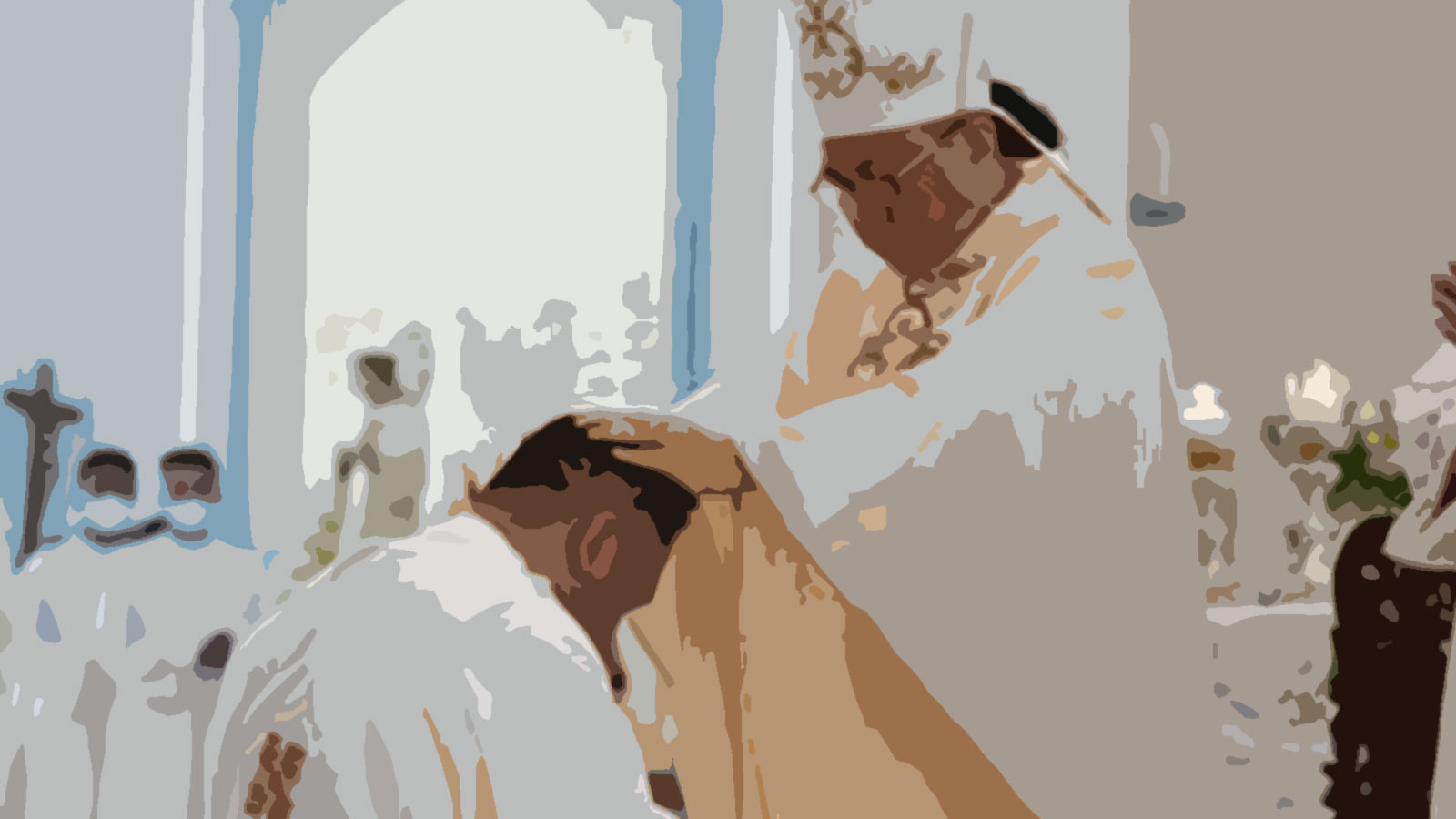
    As I embarked on my journey in the Novitiate, my initial anxiety slowly transformed into a period of profound discovery. The year of Novitiate became a profoundly transformative experience, allowing me to understand myself more deeply and to clarify my vocation. It was a time of spiritual growth and vocational discernment, preparing me for the total commitment to God that would later be expressed through my public consecration. Living in a multicultural community initially challenged me, yet it also revealed the beauty of fraternity, care for one another, and learning from our differences. Through this experience, I realized the richness of community life and how it shapes us. I knew that differences would always exist, but when approached with understanding and compassion, they can be joyfully embraced as part of our shared life in Christ

    As time went on, I discovered that the spirituality I developed in the Novitiate became a strong foundation for my religious life. Studying and meditating on the Congregation’s Constitutions deepened my understanding of its spirit and charism, allowing them to take root in my heart. I came to see that this growth was not solely the result of my efforts, but rather the grace of God working through the guidance of my beloved Director of Novices and his Socius. Their patience, wisdom, and example helped me appreciate the beauty of religious and missionary life and the whole meaning of living entirely for God. Looking back, my Novitiate year seems to have passed quickly, yet it was filled with grace and blessings that continue to shape my heart. The words of Scripture that have deeply touched me, “Place all your worries on Him, since He takes care of you” (1 Peter 5:7), have truly become a reality in my life and continue to strengthen my faith. In the end, my journey reminds me that God’s plans often unfold in ways we least expect.

    From the uncertainty of my arrival in the Philippines to the grace-filled completion of the Novitiate, I have learned to trust more deeply in His providence. With gratitude and faith, I now look ahead with hope, ready to embrace the next chapter of my journey with the same trust that has guided me thus far.


    in the frontline 1e


    As I move forward into the next phase of my formation, continuing my theological studies, I see this new stage not merely as an academic pursuit but as a continuation of my spiritual, intellectual, and pastoral development. Theology opens both my mind and heart to a deeper understanding of God, the Church, and the mission to which I am called. Each subject I study prepares me to apply my learning in future pastoral and missionary service. From the very beginning, I was given the opportunity to engage in apostolate every weekend, directly involving myself in parish activities. While this experience has been enriching, it also brought new challenges. In my first apostolic residence, I lived with a family, an experience that brought both joy and learning. Communicating with them required me to learn Tagalog, their primary language, which was difficult at first. However, this became an invitation to grow, motivating me to know so that we could truly understand one another. Through this encounter, I realized that if I open myself to being shaped by this situation, I can find deep meaning.

    Reflecting on my journey so far, I recognize that every step, challenge, and joy has been part of God’s loving plan for me. I have learned that faith is not about having all the answers, but about trusting God—even when the path is unclear. Like the disciples who left everything to follow Jesus, I am called each day to say “yes” again to His invitation. This journey has taught me to rely on God’s grace rather than my own strength, and to remember that His love never fails. I hold close the words of Jesus: “Do not be afraid, for I am with you always.” (Matthew 28:20).


    in the frontline 2e


    Missionary Initiation in Guatemala

    Star InactiveStar InactiveStar InactiveStar InactiveStar Inactive

    Giovanni Makambo

    Giovanni Makambo, cicm


    Beginning the Mission

    I arrived in the heart of Guatemala on January 9, 2025, ready to embark on a profound missionary journey. Before immersing myself in the mission, my initial task was to embrace the Spanish language—the heartbeat of the people—and to be essential for connecting deeply within the communities I would serve. After four transformative months of dedicated study, my companion, Romeo Sani, and I set forth to visit the parish communities where our CICM confreres serve as devoted priests.

    Exploring the Parishes

    In the diverse CICM district of Guatemala, we are entrusted with the spiritual needs of five parishes across four dioceses:

    - San Marcos and Santa María de la Asunción (Archdiocese of Santiago de Guatemala)

    - San Juan Evangelista (Diocese of San Marcos)

    - San Miguel Arcángel (Diocese of Santa Rosa de Lima)

    - El Calvario (Diocese of Verapaz)

    Our primary mission revolves around evangelization, with a heartfelt focus on caring for the poor, a commitment deeply rooted in our Constitutions. On June 15, 2025, I began my journey through these parishes, eager to understand the dynamics of pastoral realities encountered by our confreres. Their ministry transcends mere preaching; they are passionately involved in nurturing the holistic well-being of their communities.

    This compassionate approach resonates profoundly with the vision articulated in the Pastoral Constitution Gaudium et Spes: “The joys and the hopes, the griefs and the anxieties of the men of this age, especially those who are poor or in any way afflicted, these are the joys and hopes, the griefs and anxieties of the followers of Christ.” In this spirit, our confreres completely immerse themselves in the lives of the people. The joys and sorrows of the Guatemalan community become inextricably intertwined with their own experiences.

    Immersion in the Culture

    As I lived alongside the people, I was warmly welcomed into the embrace of Guatemalan culture. I savored the rich and diverse cuisine, marveled at rural traditions, and observed the intricacies of daily life. This immersion has been nothing short of a revelation. Echoing Julius Caesar’s renowned declaration, I might proclaim: Veni, vidi, vici – I came, I saw, I conquered. Just as Caesar celebrated his swift victory, I, guided by the Holy Spirit, arrived at my mission, bore witness to the profound realities of the people, and triumphed over my own fears and preconceptions.

    In my encounters, I have found Guatemalans to be remarkably gentle, polite, and kind-hearted. Instances of disputes and loud quarrels are rare; even in moments of anger or sorrow, they often bear a smile that belies deeper struggles. To honestly know someone in this land, one must approach with an abundance of patience, kindness, and attentiveness, skillfully posing the right questions and listening intently. In gatherings, confrontation is generally shunned, which can sometimes lead to misunderstandings and leave some conflicts lingering in silence. This tenderness demands a pastoral approach that balances patience, discernment, and supportive guidance.

    Mission Conditions

    Our work primarily unfolds in Guatemala's impoverished regions. Yet, amid the struggles, the unwavering generosity of the people is a continual source of inspiration. In the sweltering heat, where daytime rest can feel like a distant luxury, I have been touched by extraordinary acts of kindness and selflessness. Notably, I have been profoundly moved by the parishes of San Miguel of Aroche (Chiquimulilla) and El Calvario in Cobán, where our confreres tirelessly labor for the spiritual and material welfare of the people. Their mission extends far beyond mere evangelization, encompassing education, nourishing the malnourished, and enhancing public health.

    Often, our confreres minister in remote villages devoid of roads, electricity, or basic facilities for respite. The CICM mission in Guatemala calls for a spirit of selflessness and complete availability, embracing Christ among the most marginalized in society.

    Heirs to a Mission Marked by Sacrifice

    The Guatemalans we serve carry the weight of a painful past, marked by internal conflict, marginalization, discrimination, structural racism, injustice, and violence. During the dark era from 1981 to 1996, several of our missionary confreres laid down their lives in the pursuit of social justice. Among them, four brave souls were martyred while defending the cause of the oppressed:

    • Fr. Conrado de la Cruz
    • Fr. Walter Voordeckers
    • Fr. Alfonso Stessel
    • Serge Berten

    The legacies of these courageous confreres, who made the ultimate sacrifice in the field of mission, serve as a powerful source of inspiration. Like them, I aspire to love the people I am called to serve, to share in their joys and sorrows, and to serve Christ present in this blessed land of Guatemala faithfully.


    in the frontline 1d